Congratulations!
Why has Danish Documentary film been so internationally successful for decades? Here are some of the possible answers.
At the same time as the documentary film festival CPH:DOX in March 2026 was upon us for the 23rd time, the Oscar for Best Documentary Feature went to Denmark — after an impressive eight previous nominations.
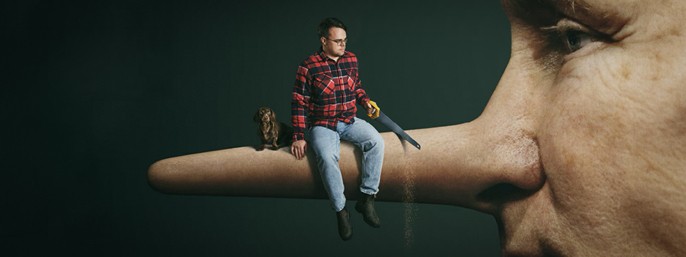
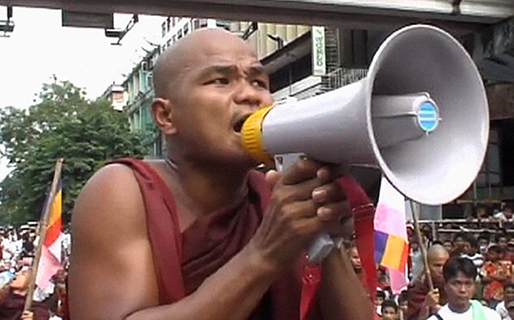
What did not succeed for, among others, Flee (2022), The Act of Killing (2013), and Burma VJ (2010) was achieved by Mr. Nobody Against Putin.
Since the first Danish nomination in 2010, only the United States has received more nominations.
That is impressive. And therefore it is interesting to consider what might explain the fact that Danish documentary filmmaking has remained so strong internationally for decades.
For if we momentarily set aside the fact that the Oscars are at least as much about (film) politics as about film art — and that the principal and co-director of Mr. Nobody Against Putin are American and Russian respectively — it does not change the fact that Denmark has stood remarkably strong on the international documentary scene for decades.
It is, for example, no coincidence that two of the companies that have worked consistently and effectively on the international stage for decades have chosen to brand themselves by naming their production companies Danish Documentary and Made in Copenhagen; the latter being the production company behind Mr. Nobody Against Putin.
Denmark is a quality brand.
Here are some suggestions as to what may, among other things, explain the decades-long strong position.
And finally, a not insignificant twist: what actually is a documentary film? An interesting question with several answers.
The National Film Board
We must begin by going quite a long way back in time — specifically to 1939, when The National Film Board was founded. It was a core Social Democratic initiative to promote public education and information. The public was to be enlightened — and, now and then, probably also lectured. After a few years, the NFB began not only distributing films but also supporting their production, and the foundations were laid for a truly unique institution. Those of us of a slightly older generation will never forget the noise of a 16mm projector in the middle of the classroom; slightly younger generations were subjected to the hair-raisingly poor quality of VHS videotapes; and the youngest generations have had the pleasure of first the far superior DVDs and, from around the turn of the millennium, digital streaming. Since the mid-1980s, we have not even needed to go to school to access the films. We could borrow first VHS tapes and later DVDs from our local library, and now we can stream them via the same institutions. Something like four generations have grown up watching documentary films. That cannot be underestimated, and when I mention it to foreign colleagues, they are practically falling off their chairs. For us, it is everyday life; for them, paradise on earth. Before making a major leap forward in time, it is worth noting the development that took place in the films supported — and gradually also imported — by the NFB. They were no longer merely educational but also artistic. Creative documentary filmmaking, as it is often called for lack of a better term — there are probably not many people who promote themselves as wanting to make an uncreative film. But film as an art form was given more and more space. Documentary film was not only about subject and content; it stood on its own aesthetic and dramaturgical footing. Yes indeed, just like feature films.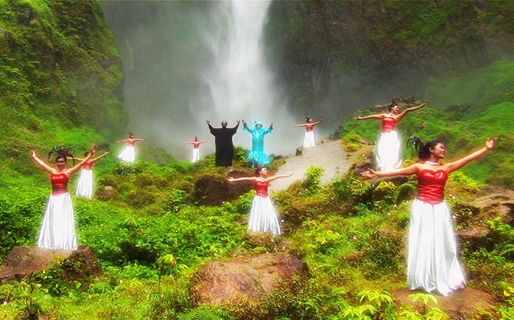
The merge
In 1998, something decisive happened. The institution for fiction films, the Danish Film Institute (DFI), and its documentary counterpart, the National Film Board (NFB), were merged. The positive and negative aspects are still debated among people working in documentary film.
It is almost never an advantage for documentary filmmaking to come under the same roof as its big brother. And it was indeed a setback for the development of the genre that it lost its dedicated ambassador. I am, however, among those who also see some positive aspects for documentary film as a result of the merger — more on that shortly.
But I cannot resist mentioning a couple of curiosities that, strictly speaking, have nothing to do with the matter but are nonetheless quite illustrative of the ‘balance of power’.
The new institution was named the Danish Film Institute. That sounds more like absorption than merger. The DFI people used PCs; the NFB people used the slightly cheekier Macs. The new DFI dictated PCs. The DFI people had a day off on Denmark’s national day, and the NFB people on 1 May. You can guess which day the new DFI chose.
The new DFI established two parallel production departments, one for feature films and one for documentaries. I was hired for a newly created position as a producer in the documentary production department — one of the classic positions in the firing line. And those positions were pretty crowded in the first years after the merger.
For example, after only a couple of days in the job, I attended a meeting of the Danish Film Directors’ Association. As far as I recall, the first question I was asked was, “What the hell is a type like you supposed to be good for?”
There were several reasons for this question.
First, I was to assess whether it was realistic that a film, the film commissioner wished to support, could actually be made within the planned budget and organisational framework. Applicants were not used to that kind of professional challenge.
Second, if a production had international potential, producers were asked to explore those possibilities before the DFI determined its level of support. Producers were not used to that either.
And third, producer and director could no longer be the same person. Many directors who had only acted as producers out of necessity were not used to that.
Today, as far as I am aware, there is no criticism of the producer system at the DFI.
Probably because it has contributed to the current situation: directors can concentrate on directing; producers have generally become more professionalised; and engagement with the international market brings inspiration, financing, and valuable contacts. A number of strong documentary producers have emerged hand in hand with these initiatives — including several behind the Oscar nominations.
Finally, it should be mentioned that the new DFI introduced Development Funding — support at a stage when the director has not yet found the film’s form. At a moment when it is extremely difficult to obtain other funding because it is so hard to describe the final product.
The other three institutional corners
However, the DFI was only one corner of a decisive square. Three other corners were the Film School, the professional organisations, and Public Service television.
The documentary directing department at the National Film School of Denmark was established in 1992 and from the very beginning placed emphasis on students developing a strong personal voice.
An auteur education — no Public Information for Citizens about Society here.
The documentary education has played a decisive role in ensuring that Denmark now have a veritable flood of talented directors.
The introduction of a proper producer education in 1983 — later called Creative Producer — and the upgrading of the Screenwriting education in 1988 were also important. These two departments are located within the Film School’s fiction department, but collaboration with students from the documentary department naturally took — and continues to take — place.
Producers are not only trained to prepare budgets and organise shoots, but as creative collaborators. And directors gained more and increasingly specialised sparring partners for writing scripts — something one is not necessarily good at, even if one is a good director.
Fortunately, this collaboration continues beyond the period of study. Many professional roles — not least cinematographers and editors — work across both genres, to the great benefit of each.
Among the professional organisations, it has been particularly significant that producers from the documentary and fiction genres joined forces in the Producers’ Association in 1998. Documentary producers had struggled to make themselves heard on their own, and the Association’s structure — with independent organisation of the genres and representation in a shared board — made the merger of the two genres, unusually, a strengthening for documentary professionals.
The relationship between the independent documentary sector and public service television has not always been an uncomplicated love affair. The more artistically driven documentaries from independent directors and producers have often struggled to reach large viewing figures. The sector has regularly criticised television for failing to promote the films sufficiently and for scheduling them when most viewers had already gone to bed.
TV commissioning editors, conversely, argued that the sector did not do enough to reach a broader audience.
But again, if we compare ourselves with the many countries that have not had strong public service television, the comparison clearly falls in Denmark’s favour. Hats off to DRTV and TV2.
Important developments within fiction film
Interestingly, major moments within feature filmmaking have also had an impact on documentary film. They have drawn international attention to Danish film in general and opened the eyes of Danish politicians to the value of branding Denmark abroad. And here it is important to consider the significance of individuals — not only the four institutional corners. In 1987, Babette’s Feast won an Oscar. In 1988 and 1989, Pelle the Conqueror won the Palme d’Or in Cannes and an Oscar respectively. In 1996, Breaking the Waves won the Grand Prix in Cannes. And in 2000, Dancer in the Dark won the Palme d’Or at the same festival. Add to this the Dogme films’ Vow of Chastity from 1995, which not only placed Denmark even more firmly on the world map but constituted an internationally recognised revolution in filmmaking method and aesthetics: handheld camera, no artificial lighting, no sets, no costumes, and so forth. The camera was to follow the actors — not, as usual, the other way round. Incidentally, a vow of chastity that was effectively tested in advance in The Kingdom (Riget) from 1994 — a television series that sent tremors through television screens and was followed by songs of praise from actors liberated from taped floor marks and carefully rehearsed camera movements. With the focus of this article, it is impossible not to point out the obvious: The production conditions for The Kingdom and the Dogme films bear a striking resemblance to those of documentary filmmaking. One can almost see the opening credits: Based on a true film. Prior to these successful fiction years, Danish feature film had for decades lived a languishing existence, and the number of productions had fallen to a level barely sufficient to sustain the industry. As representatives of the professional trades put it: so much time passes between productions that in the meantime we forget how to make films. Naturally, the film industry had complained about these conditions for years and had repeatedly called — in vain — for increased funding. But the international successes and the resulting branding opportunities created momentum that the leadership of the new DFI was able to exploit. Instead of merely calling for more money, they presented a concrete four-year plan that would have done any Soviet planner proud: If you grant us the requested budget increase, here is the plan for how we will spend it. It worked. Funding was increased — and, because of the merger of the genres, documentary film benefited as well. So, this more or less covered the ground. But not quite.
… and then there are:
The recently concluded documentary film festival CPH:DOX (March 2026) was founded in 1993 and has grown into one of the largest and most significant festivals in the world. In everyday circumstances, it is not easy to fill cinema halls when documentaries are on the programme. But encouragement can be found at CPH:DOX, which last year attracted more than 150,000 paying cinema-goers — and it would not be surprising if attendance rises once again at this year’s festival. Competition for calendar space among the vast number of festivals worldwide is fierce; CPH:DOX has succeeded in establishing a distinct profile, particularly by challenging the traditional boundaries of documentary film, both in terms of the films themselves and the screening. Equally important was the founding in 1996 of the Danish-based international documentary organisation European Documentary Network (EDN). For decades, EDN contributed to the creation of crucial documentary institutions in European countries with weak film infrastructures — including several Southern European countries where national film funds were little more than an office on the fifth floor of the Ministry of Culture. But above all in the former communist countries of Eastern and Central Europe, which after the fall of the Wall experienced the collapse of a fully state-funded and state-organised film infrastructure. Here, EDN was a decisive factor in building organisations and activities that connected these countries to the rest of Europe. Most of them still exist today. Thousands of documentary filmmakers across Europe have a great deal to thank Danish EDN for. It is no coincidence that EDN’s first director received two national orders of merit from the presidents of Latvia and Lithuania. And then there is the European Film College in the beautiful dunes near Ebeltoft, Jutland — an international folk high school that opened in 1993 and every year offers a highly respected film course to more than one hundred international film students. And the DFI’s support scheme New Danish Screen, established in 2004, which — unlike the existing funding schemes — focuses not on the finished product but on developing talent. And the independent voice that documentary film lost with the closure of the National Film Board has since been partly restored through the creation of a position as Head of Documentary at the DFI. Have I forgotten something — or someone? Almost certainly. And to that there is only one thing to say: my apologies.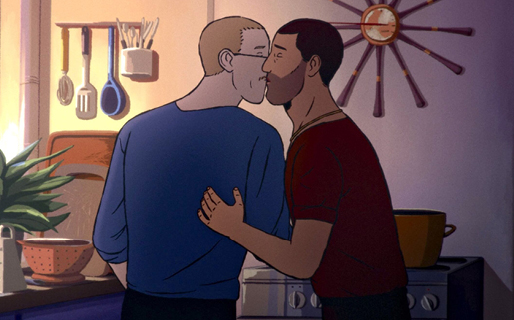
Documentary as a genre
Allow me, finally, to turn briefly to documentary film as a genre. Above, I have referred to it in the singular — and nothing could be more misleading. There are numerous subgenres, as well as hybrid films that blend fiction and documentary; since the turn of the millennium, animated documentary has even gained significant ground.
“What did you call it?” I exclaimed when a producer first asked whether such a project might be eligible for DFI support.
At the risk of oversimplification, one might describe the positions within the documentary genre as follows:
At one end, the journalistic documentary — whose primary purpose is to document and demonstrate in a neutral manner.
At the other end, the character-driven documentary — whose primary purpose is subjective storytelling and interpretation.
As far as I can see, Mr. Nobody Against Putin is neatly positioned somewhere between these two poles.
It is the character-driven documentary that, in its finished form, most closely resembles the feature film: we follow individuals who are exposed to more or less dramatic upheavals.
Interestingly, however, this is also the subgenre that, in the process of creation, lies furthest from the feature film. A feature film has a script, sets, actors, and so on — planned elements under the director’s control.
The character-driven documentary follows living people who — just like you and me — do exactly as they please. The building blocks of the story lie entirely outside the filmmaker’s control. Here, one of the director’s greatest abilities is to spot a potential development:
“I do not know what will happen, but I am fairly certain that something interesting will happen.”
The Danish documentary Apolonia, Apolonia, which won the main award at the leading documentary festival IDFA in Amsterdam in 2022, follows its protagonist for 13 — yes, thirteen — years.
I can assure you that she experiences dramatic upheavals that would have been impossible for the director to foresee in 2009.
Had it been a fiction film — interesting. As a documentary — intensely present.
Thank you for your attention, congratulations, and long live documentary film.
Mikael Opstrup, April 2026